TACLOBAN CITY — Preparations for El Niño are underway in Eastern Visayas, with regional agencies and provincial disaster councils discussing measures to protect agriculture, water supplies, health, and livelihoods. But the documents reviewed for this report do not yet establish how much each local government has committed—or which interventions have reached communities.
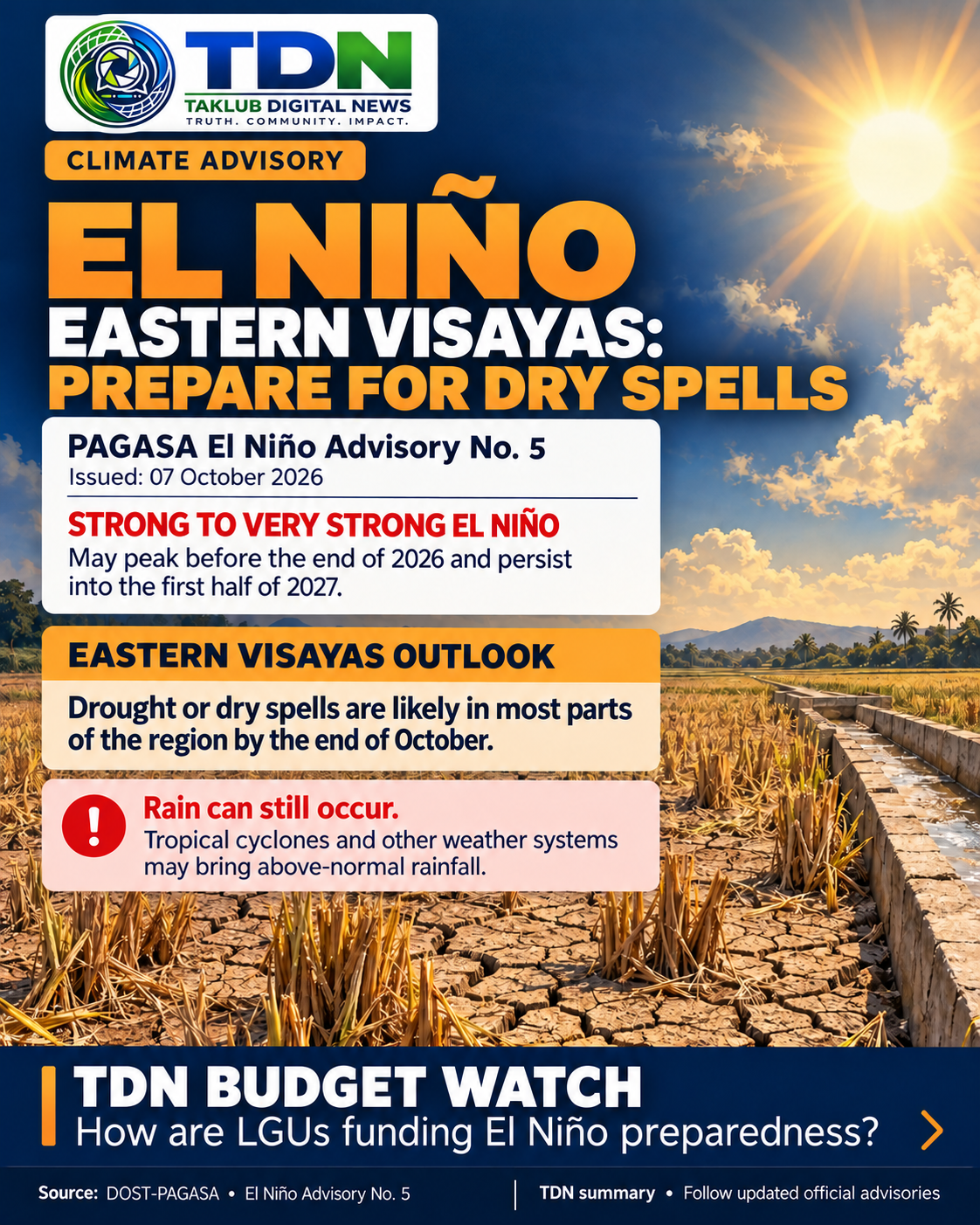
PAGASA’s October 7, 2026 monitoring update reported a strong-to-very-strong El Niño in the Tropical Pacific, potentially peaking before year-end and continuing through the first half of 2027. Its September advisory warned of rainfall deficits and pressure on water resources, food production, energy, and public health. These are forecasts of heightened risk; conditions will vary by locality.
For Eastern Visayas, the concern is already taking concrete form. An October 8 Philippine Information Agency report, citing the National Irrigation Administration, identified six irrigation systems in Leyte with below-normal water during the first week of October: Tingib in Pastrana, Balire South in MacArthur, Gibugan in Mayorga, Mainit in Alangalang, Pongso in Barugo, and Bao in Kananga.
For farming households, reduced irrigation can mean difficult decisions about planting, additional production costs, and uncertainty over the next harvest.
What preparations have been reported?
At its September 22 meeting in Palo, Leyte, the Regional Disaster Risk Reduction and Management Council discussed the proposed adoption of a Regional El Niño Action Plan, intended to guide preparedness, mitigation, response, and sectoral interventions.
The council also discussed stronger resource coordination and the integration of local disaster health plans into local DRRM plans. The report described proposals and discussions; it did not establish that every measure had been approved, funded, or implemented.
Provincial preparations include the following:
Southern Leyte: Its provincial disaster council discussed contingency and precautionary measures on September 28, with PAGASA emphasizing early preparation for agricultural impacts.
Eastern Samar: During its September 30 meeting, the provincial council strengthened coordination on water resources, agriculture, fire prevention, and essential services. PAGASA’s Borongan station reported dry spells from June to September and projected drought conditions from October through March. That outlook was reported on October 1 and should be checked against subsequent advisories.
These reports provide examples of preparations. They are not a complete inventory of readiness across Eastern Visayas.
Protecting farms and managing available water
NIA-8 reported coordination with the Department of Agriculture and LGUs on mitigation measures, including alternative crops and small livelihood projects.
Its advice to farmers includes coordinating irrigation schedules, prioritizing water during critical crop stages, clearing irrigation canals, synchronizing planting, and considering suitable shorter-duration or drought-tolerant rice varieties. These recommendations require local agricultural guidance and assessment of available water. They do not establish that assistance has already been delivered to every affected farmer.
TDN Budget Watch: Following preparedness money
Through its Budget Watch campaign, Taklub Digital News will examine how LGUs plan to finance their El Niño interventions—and whether those plans translate into timely services.
Republic Act No. 10121 requires LGUs to set aside at least five percent of estimated revenue from regular sources for the Local Disaster Risk Reduction and Management Fund. 30% of that appropriation is allocated to a Quick Response Fund for relief and recovery.
The law also provides for pre-disaster preparedness spending and requires unexpended LDRRMF to accrue to a special trust fund for DRRM activities within the next five years. Disaster funding therefore includes resources for reducing risks before an emergency escalates.
TDN’s review will seek to establish:
The available resources: Current-year appropriations, Quick Response Fund allocations, and prior-year trust-fund balances, reported separately to avoid double counting.
The approved interventions: Which El Niño activities appear in local plans, investment programs, and budgets, with identified communities and beneficiaries.
The implementation schedule: When water-supply measures, agricultural support, health protection, and other approved activities are expected to begin.
The actual delivery: What has been procured, paid for, completed, and received by communities.
The explanations: How officials account for delays, funding gaps, or changes in priorities.
Budget allocations, obligations, disbursements, and completed services will be distinguished. An announced allocation alone does not demonstrate that assistance has reached residents.
Low spending alone does not establish misuse. TDN will examine timing, procurement, implementation constraints, and official explanations alongside community experience.
What residents should be able to know
For residents, preparedness becomes tangible when they know where safe water will come from, how farmers can access assistance, which communities receive priority, and when support will arrive.
TDN will pursue these questions through document reviews, field reporting, and interviews with responsible officials and affected residents. LGU-specific funding commitments and results remain subject to verification.
Residents may share information about water interruptions, irrigation shortages, crop damage, or announced assistance in their communities, including the location and date, without posting sensitive personal details.
Sources & reporting context
- DOST-PAGASA, El Niño Advisory No. 5, issued October 7, 2026 — the dated outlook summarized in the graphic.
- PAGASA’s official advisories — check for subsequent climate updates and local forecasts.
- Philippine Information Agency, October 8, 2026: NIA-8 preparations and Leyte irrigation systems.
- Republic Act No. 10121, Section 21 — local disaster-fund provisions.